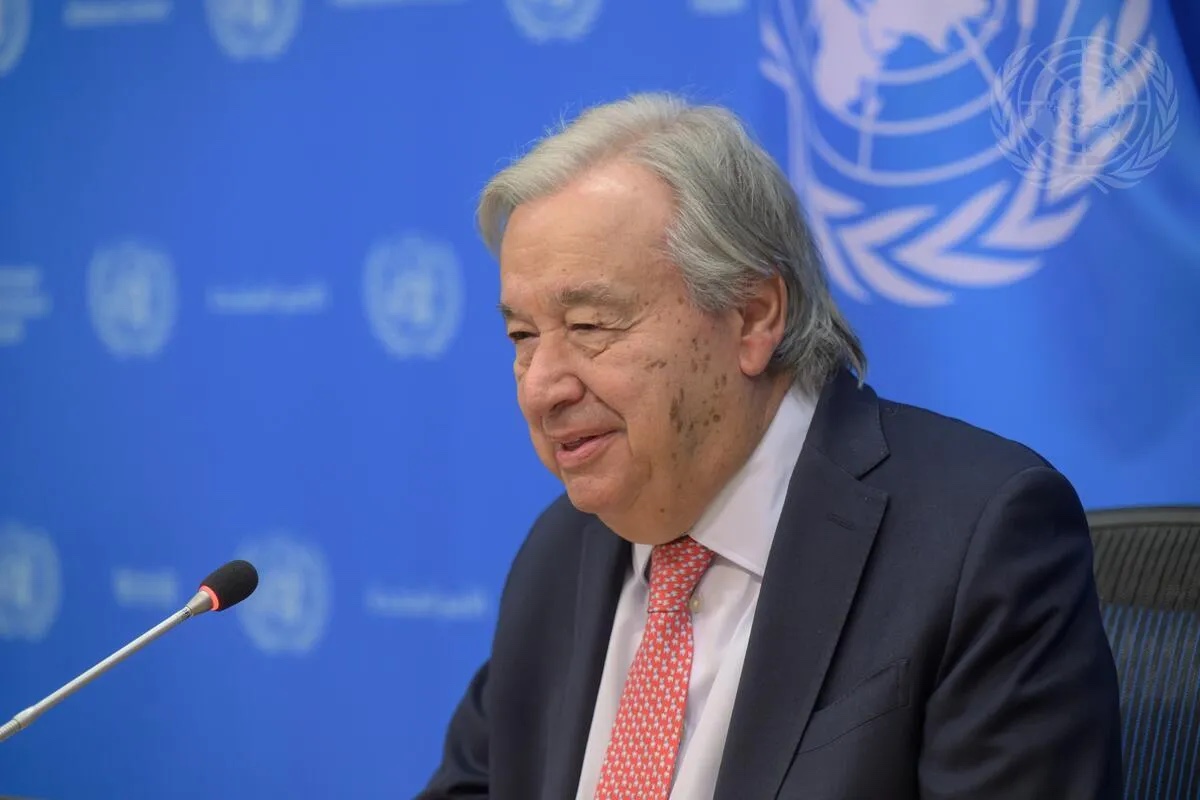
The United Nations has urged Colombia to accelerate the implementation of its 2016 peace agreement with former FARC-EP rebels, warning that continued violence in conflict-affected regions threatens efforts to establish lasting peace as the accord marks its 10th anniversary.
Secretary-General António Guterres called for renewed commitment to the agreement’s outstanding provisions, including the reintegration of former combatants into civilian society, development in marginalised territories and protection of victims’ rights through transitional justice.
In a statement delivered by his spokesperson Stéphane Dujarric, Guterres acknowledged the progress made over the past decade but expressed concern about violence continuing in regions still affected by conflict.
With five years remaining in the agreement’s 15-year implementation period, the Secretary-General urged Colombian authorities and other parties involved to intensify efforts to fulfil its commitments.
He said the agreement remained an important instrument for Colombia’s authorities in their efforts to improve security and development in territories where armed conflict continues.
The concerns come amid persistent insecurity in several parts of the country, where armed groups have expanded their presence following the withdrawal of FARC-EP fighters from territories they previously controlled.
A United Nations report covering developments between June 27 and September 26, 2026, documented 5,600 people displaced and another 4,400 confined across 15 municipalities in seven departments between June 27 and August 30.
The report also confirmed 501 killings of former FARC-EP combatants since the signing of the agreement, alongside 185 attempted homicides and 56 enforced disappearances.
It further recorded 40 allegations of killings of social leaders between June 27 and September 26, highlighting the security challenges facing communities and individuals involved in peacebuilding efforts.
In October, the UN told the Security Council that the agreement remained under pressure from growing insecurity, calling for proper funding, improved coordination between institutions and stronger protection for former combatants.
Despite the challenges, the peace process has recorded progress in the reintegration of former fighters. More than 11,000 former FARC-EP members remained committed to civilian reintegration, having established approximately 6,000 productive projects and 300 cooperatives with support from the state and international partners.
Signed on November 24, 2016, the Final Peace Agreement brought an official end to more than five decades of armed confrontation between the Colombian government and the Revolutionary Armed Forces of Colombia (FARC-EP).
The agreement established commitments covering comprehensive rural reform, political participation, disarmament and reintegration of former combatants, addressing illicit drugs, transitional justice for victims and mechanisms to oversee implementation.
It also established a transitional justice framework to address crimes committed during the conflict, establish the truth and provide reparations to victims.
Guterres commended the commitment of the parties, Colombian institutions, civil society and the country’s people in advancing the peace process.
He reaffirmed the United Nations’ commitment to continue supporting Colombia’s nationally led efforts to implement the agreement.
With implementation scheduled to run until 2031, the remaining five years will be critical in determining how far the country can fulfil its commitments, strengthen security in affected territories and deliver on the promises made to victims and former combatants.